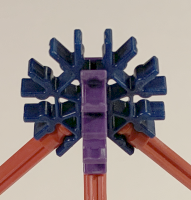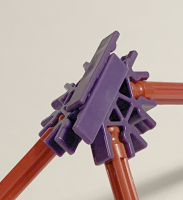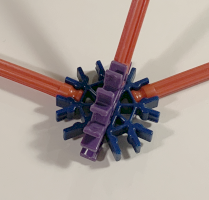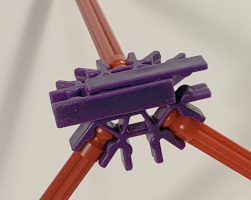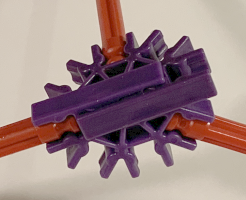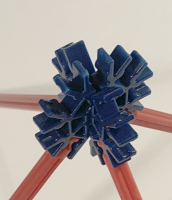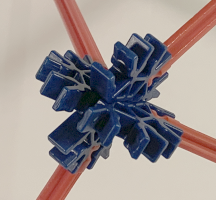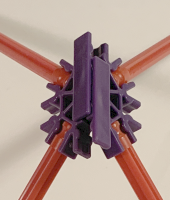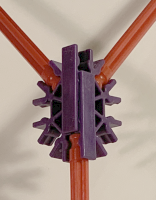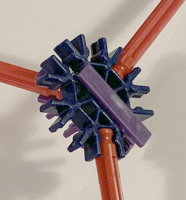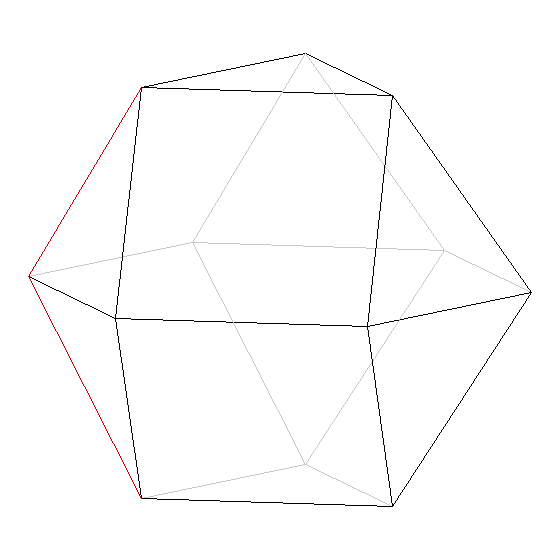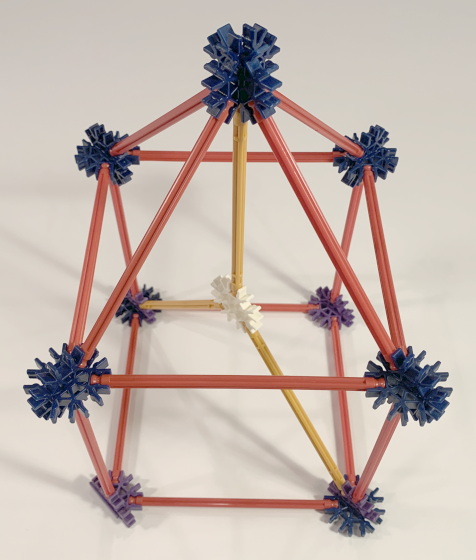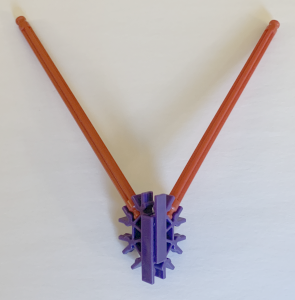
| Most obvious K'Nex angles are multiples of 45 degrees, but if we allow connectors to extend a bit outside the plane, we can create a 60-degree angle using a pair of purple and/or blue connectors. In the plane formed by the two rods, the rods create an angle of exactly 60°. |
|
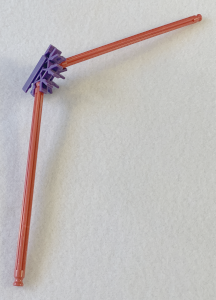
| Similarly, we can create an angle of 120° between two rods if different sockets in the connectors are used. Once again, the connectors themselves extend somewhat outside the plane that contains the rods. |
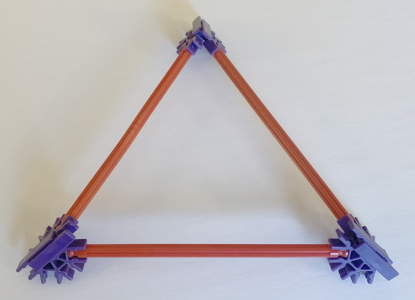
| Three 60° angles can be combined to create an equilateral triangle. |
|
If a convex polyhedron has regular polygon faces of more than one type (triangle, square, pentagon, hexagon, octagon and/or decagon) and vertices that are all symmetric to each other, it is known as an Archimedean solid. There are 13 Archimedean solids, each of which has a single vertex configuration.
Polyhedron name Polygon face Interior angle Quantity at vertex Total angle Tetrahedron Equilateral triangle 60° 3 180° Octahedron Equilateral triangle 60° 4 240° Icosahedron Equilateral triangle 60° 5 300° Cube Square 90° 3 270° Dodecahedron Regular pentagon 108° 3 324°
Finally, a Johnson solid is a convex polyhedron whose faces are regular polygons that do not meet in identical vertices. There are 92 Johnson solids, denoted here by their standard indices (Jn), each of which has two or more different vertex configurations.
These three groups of polyhedra are usually considered to be mutually exclusive.
In a given polyhedron, a vertex having 4 or more edges also has particular angles between non-adjacent pairs of edges, which may not be realizable using K'Nex connectors and rods. One example is the triangular orthobicupola (Johnson solid J27), each of whose equatorial 3.3.4.4 vertices has an angle of about 109.47° between its upward and downward edges separating a pair of triangles from a pair of squares. This angle cannot be created using a K'Nex connector.
Two of the 5 Platonic solids, five of the 13 Archimedean solids and eight of the 92 Johnson solids can be created using single rigid K'Nex rods for the edges and purple and/or blue connectors for the vertices.
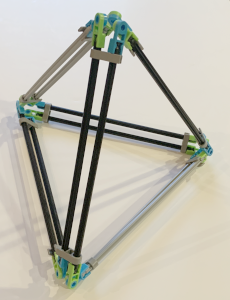
| Many other polyhedra can be created in K'Nex using edges represented by two parallel rods flexibly linked to each other with orange connectors, as in the tetrahedron at right. Here is an alternative construction using hinges. |
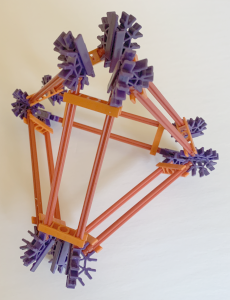
|
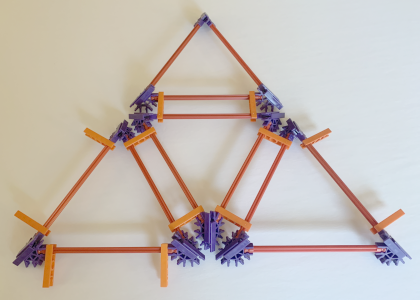
| Polyhedra constructed in this way can be first laid out as a net to aid assembly. However, the edges would need to be much longer than the distance between the parallel rods for a realistic visualization of the overall shape, so this approach is less appealing than solutions using single rods for edges, and is not pursued further on this page. |
3.3.4 3.4.6 3.4.8 4.4.4 4.4.8 3.3.3.3 3.3.4.4 3.4.3.4 3.4.4.4 Opposite edge
pair angles:90° 90° & 135° 120° 135°
3.8.8 4.6.6 4.6.8
| Polyhedron | Vertex configuration(s) | Thumbnail | |
|---|---|---|---|
| Platonic solids | |||
| Cube | 8 x 4.4.4 | 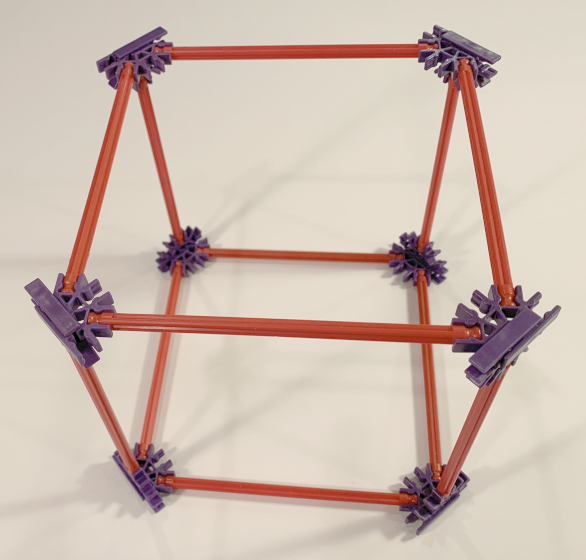 | |
| Octahedron | 6 x 3.3.3.3 | 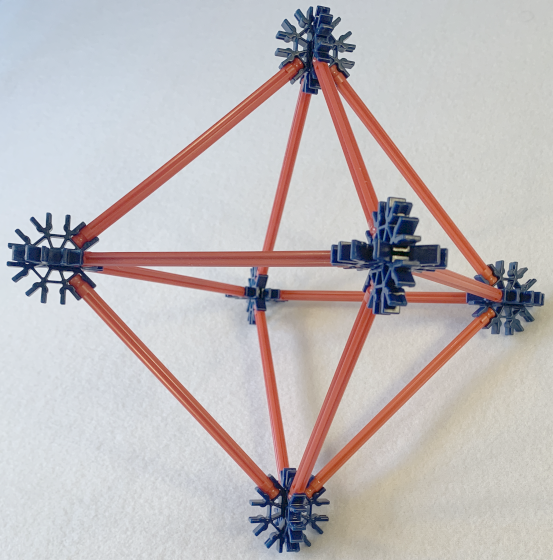 | |
| Archimedean solids | |||
| Cuboctahedron | 12 x 3.4.3.4 | 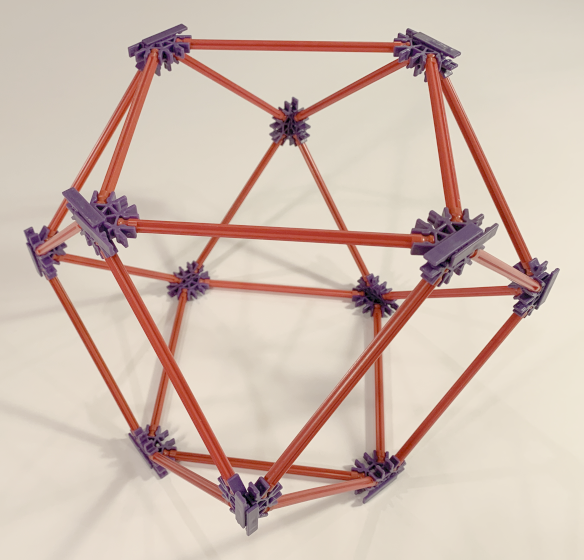 | |
| Truncated cube | 24 x 3.8.8 | 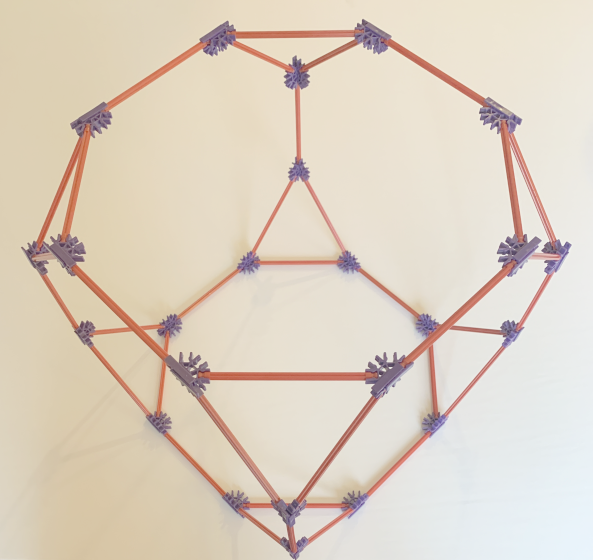 | |
| Truncated octahedron | 24 x 4.6.6 | 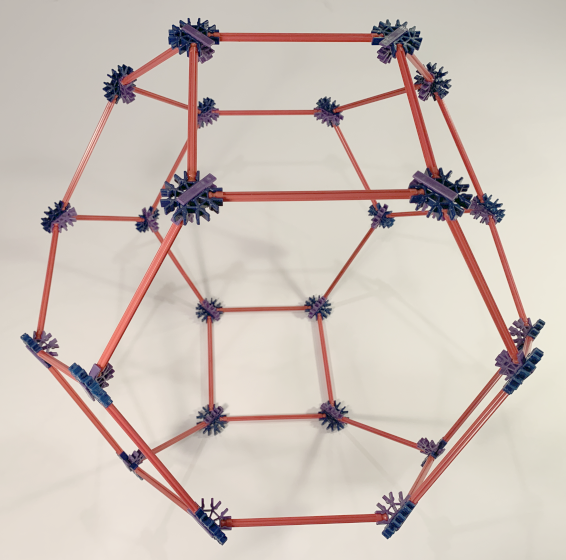 | |
| Small rhombicuboctahedron | 24 x 3.4.4.4 | 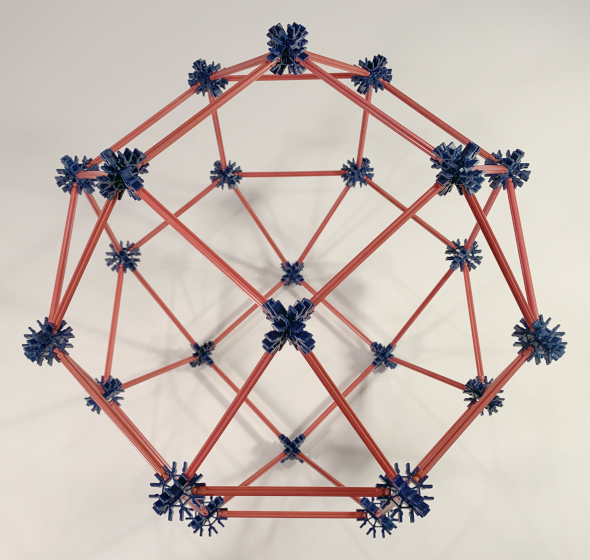 | |
| Great rhombicuboctahedron | 48 x 4.6.8 |  | |
| Johnson solids | |||
| Square pyramid (J1) | 4 x 3.3.4 1 x 3.3.3.3 | 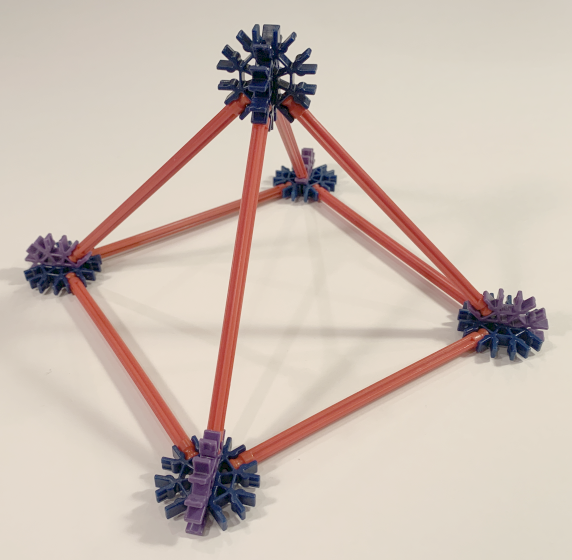 | |
| Triangular cupola (J3) | 6 x 3.4.6 3 x 3.4.3.4 | 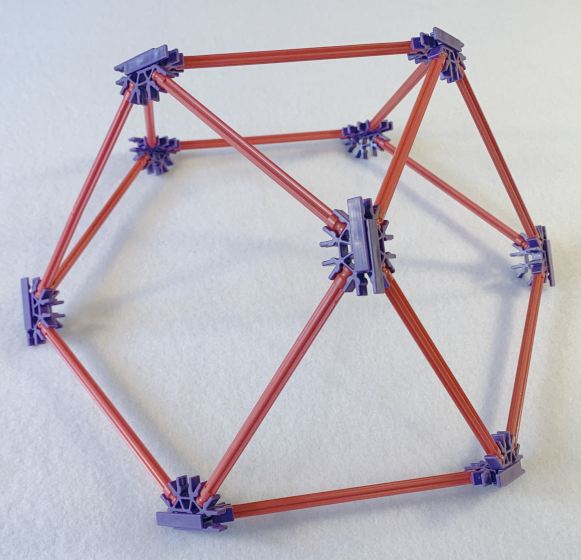 | |
| Square cupola (J4) | 8 x 3.4.8 4 x 3.4.4.4 | 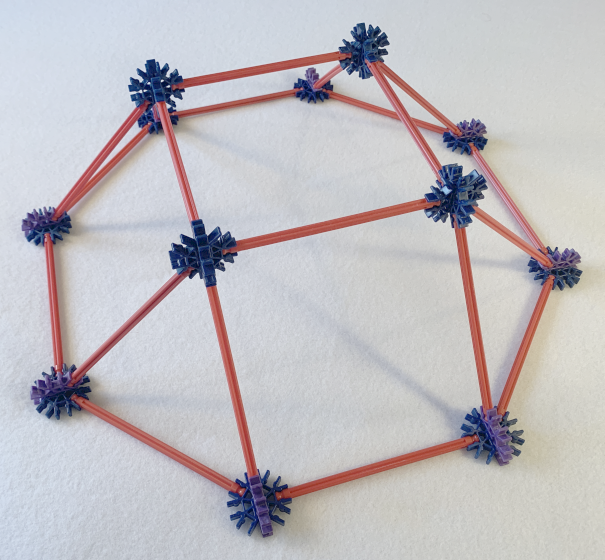 | |
| Elongated square pyramid (J8) | 4 x 4.4.4 4 x 3.3.4.4 1 x 3.3.3.3 | 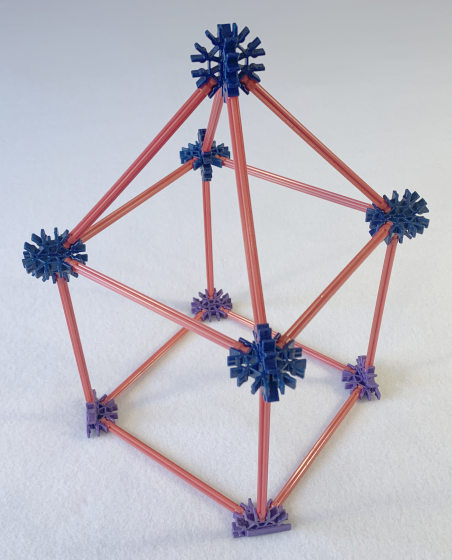 | |
| Elongated square bipyramid (J15) | 8 x 3.3.4.4 2 x 3.3.3.3 | 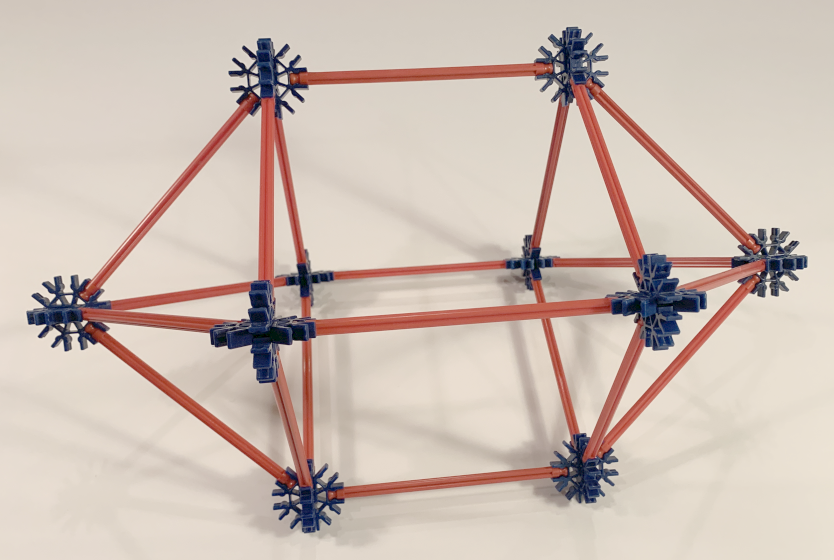 | |
| Elongated square cupola (J19) | 8 x 4.4.8 12 x 3.4.4.4 | 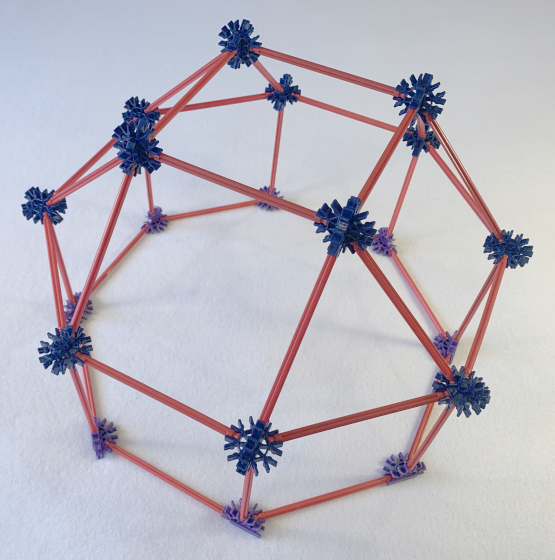 | |
| Square orthobicupola (J28) | 8 x 3.4.4.4 8 x 3.3.4.4 | 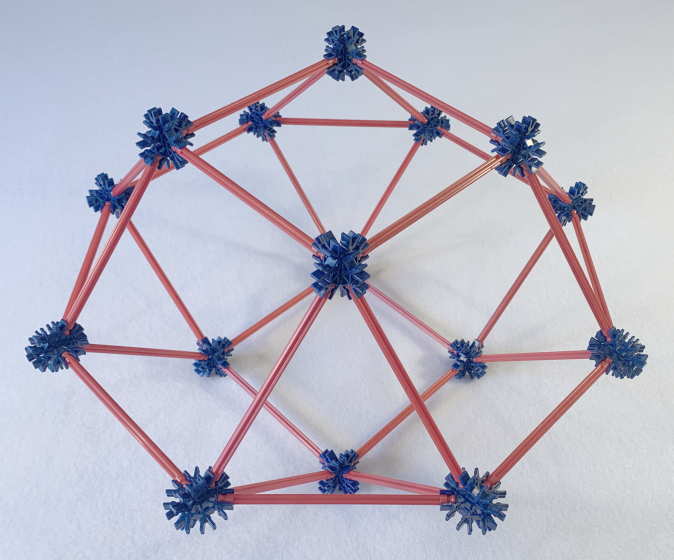 | |
| Elongated square gyrobicupola (J37) | 24 x 3.4.4.4 | 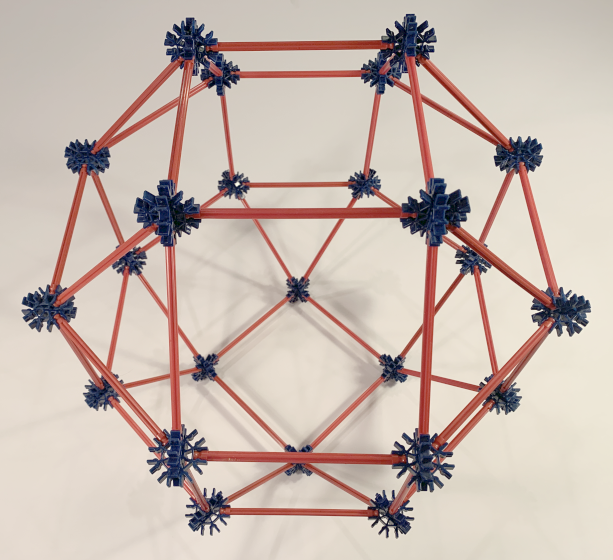 |
If a polyhedron has a equatorial parallel that is a horizontal regular hexagon, such as the Elongated Triangular Cupola (J18), the K'Nex connector constraints prevent it from having a vertical rod extending from a vertex, as can be seen in the 3.4.6 vertices in the base for Johnson solid J3. The fully-symmetric vertex configuration 3.3.3.3 avoids this constraint.
| Polyhedron | Circumradius for side 1 | Diameter (inches) | |
|---|---|---|---|
| Platonic solids | |||
| Octahedron |  | 8.37 | |
| Cube |  | 10.26 | |
| Archimedean solids | |||
| Cuboctahedron |  | 11.84 | |
| Small rhombicuboctahedron |  | 16.57 | |
| Truncated octahedron |  | 18.72 | |
| Great rhombicuboctahedron | 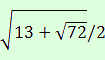 | 19.42 | |
| Truncated cube |  | 21.07 | |
| Johnson solids | |||
| Square pyramid (J1) | | 8.37 | |
| Triangular cupola (J3) | | 11.84 | |
| Elongated square pyramid (J8) |  | 11.84 | |
| Elongated square bipyramid (J15) | 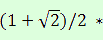 | 14.30 | |
| Square orthobicupola (J28) | 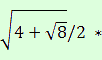 | 15.47 | |
| Square cupola (J4) | | 16.57 | |
| Elongated square cupola (J19) | | 16.57 | |
| Elongated square gyrobicupola (J37) | | 16.57 |
*: Convex hulls:
J8: In a vertical plane cutting the base diagonally, the epicenter of the extreme vertices at the apex and two base corners is at the center of an inverted equilateral "Y" shape and is at a distance of 1 side length from those vertices, as shown here. The interior of the corresponding spherical convex hull contains the 4 vertices connecting the cube and square pyramid.
J15: By symmetry, the center of the spherical convex hull is the center point of the axis joining the two apex points. The corresponding radius is the height of one square pyramid plus half the height of the cube.
J28: The equatorial octagon can be rotated to enclose the other 8 vertices of the polyhedron. The spherical convex hull is centered on the octagon and has a radius that is the circumradius of the octagon.
| Polyhedron | Rods (edges) | Purple connectors | Blue connectors | Totals | |
|---|---|---|---|---|---|
| Platonic solids | |||||
| Cube | 12 | 16 | 28 | ||
| Octahedron | 12 | 12 | 24 | ||
| Archimedean solids | |||||
| Cuboctahedron | 24 | 24 | 48 | ||
| Truncated cube | 36 | 48 | 84 | ||
| Truncated octahedron | 36 | 24 | 24 | 84 | |
| Small rhombicuboctahedron | 48 | 48 | 96 | ||
| Great rhombicuboctahedron | 72 | 48 | 48 | 168 | |
| Johnson solids | |||||
| Square pyramid (J1) | 8 | 4 | 6 | 18 | |
| Triangular cupola (J3) | 15 | 18 | 33 | ||
| Square cupola (J4) | 20 | 8 | 16 | 44 | |
| Elongated square pyramid (J8) | 16 | 8 | 10 | 34 | |
| Elongated square bipyramid (J15) | 20 | 20 | 40 | ||
| Elongated square cupola (J19) | 36 | 16 | 24 | 76 | |
| Square orthobicupola (J28) | 32 | 32 | 64 | ||
| Elongated square gyrobicupola (J37) | 48 | 48 | 96 | ||
| Totals | 435 | 214 | 288 | 937 |
| Table of Contents | MathSite | Home |